Hunger Games Sunrise on the Reaping Releases Early in Theaters
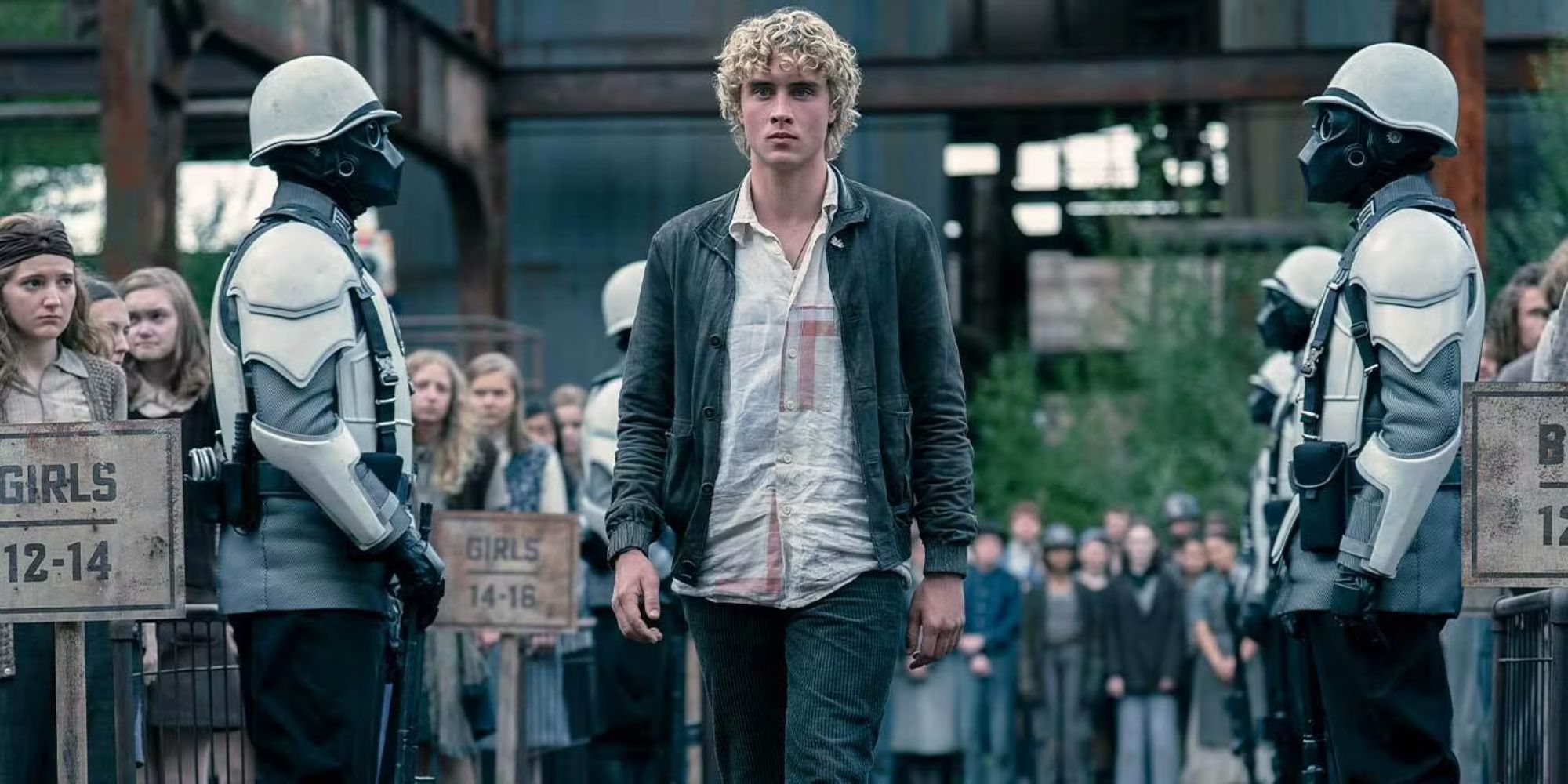
The Hunger Games: Sunrise on the Reeping – A New Era for Panem
The odds are officially in all of our favor this September. The franchise that captivated the world with its stark portrayal of survival, resistance, and the human cost of authoritarianism is preparing to return to Panem with Sunrise on the Reeping, an adaptation of Suzanne Collins’ latest novel centered on the Second Quarter Quell and a young Haymitch Abernathy. While the film itself is still a couple of months away, audiences will now have an opportunity to see it on the big screen considerably earlier than originally planned. This early release strategy not only builds anticipation but also honors the legacy of a series that has consistently pushed boundaries and inspired generations. President Snow would surely approve of the timing, as the return to the Capitol’s darkest traditions signals a new chapter in the saga that began over a decade ago.
Collins’ ability to weave intimate character struggles into the broader tapestry of a dystopian state has made the Hunger Games franchise a cultural touchstone. From the first novel’s visceral opening at the Reaping to the final rebellion’s climax, the series has remained rooted in the tension between individual agency and systemic oppression. Sunrise on the Reeping promises to deepen that exploration by focusing on the formative years of one of the most complex mentors in young adult literature. Haymitch Abernathy, whose win in the Second Quarter Quell set the tone for his later role as an unlikely guide to Katniss Everdeen and Peeta Mellark, deserves a story that honors both his cunning and his scars. This adaptation arrives at a moment when fans are eager to understand not just how Haymitch survived, but what he endured to become the man Katniss relied upon when the stakes could not have been higher.
From Page to Panem: The Adaptation Journey
The transition from Collins’ written word to the silver screen has always been a meticulous process. The original trilogy was brought to life with a commitment to practical effects, grounded performances, and a visual palette that reflected the grit of the districts against the excess of the Capitol. With Sunrise on the Reeping, the creative team faces the challenge of translating a novel that, while rooted in established lore, offers a fresh temporal perspective. The decision to adapt the Second Quarter Quell – an event referenced frequently but never fully dramatized for screen – represents both a risk and an opportunity to expand the mythology in ways that satisfy long-time fans while accessibility for new viewers.
Collins’ 2025 novel, which serves as the source material, has been lauded for its tight plotting and emotional depth. By focusing on a younger Haymitch, the narrative shifts perspective from the familiar post-victory trauma to the visceral intensity of the arena itself. This choice allows for a deeper examination of the Capitol’s manipulation tactics during the Reaping and the early stages of the Games. The adaptation team has indicated a dedication to preserving the novel’s tone: cynical yet hopeful, bleak yet illuminated by moments of fierce humanity. As with previous installments, the goal is not merely to recreate plot points but to capture the underlying philosophy that has made the series resonate globally.
Production design will likely lean on the established visual language of Panem – the stark contrast between the muted tones of District 12 and the flamboyant excess of the Capitol. However, the Second Quarter Quell introduces unique arena mechanics that differ from the first Games. Audiences can expect a design that reflects the “double the tributes” rule, a hallmark of Quarter Quell editions. The early release of the film, arriving two months ahead of the traditional schedule, suggests a strategic push by Lionsgate to capitalize on seasonal viewing habits and to generate award-season buzz earlier in the calendar year. This approach mirrors successful strategies in the industry, where early premieres allow for extended theatrical runs and increased word-of-mouth momentum.
The Second Quarter Quell: Mechanics and Meaning
Every twenty-five years, the Capitol alters the rules of the Hunger Games to mark the Quarter Quell. These special editions serve as narrative inflection points, often raising the stakes, changing the number of tributes, or introducing deadly twists that force both characters and audiences to reconsider the nature of the spectacle. The Second Quarter Quell, holding particular significance in the series’ chronology, doubled the number of tributes reaped from each district. This mechanic not only increased the body count but also intensified the political statement: the Capitol’s power was not static but cyclically reinforced.
The Reaping itself is a ritual steeped in dread. Children’s names are placed in tesserae – entries that trade grain and oil for additional entries, a grim reflection of poverty-driven desperation. On the day of the Reaping, the atmosphere is thick with resignation and fear. For the Second Quarter Quell, this process is amplified, as families know the odds are mathematically stacked against them from the outset. The psychological weight of hearing one’s name called twice, or seeing twice the usual quota of children filed onto the stage, creates a palpable tension that Sunrise on the Reeping aims to translate effectively to the screen.
Haymitch’s victory in this particular iteration of the Games is a study in resourcefulness. Unlike the first Hunger Games, where tributes were often ill-prepared for the arena’s harsh realities, the Second Quarter Quell demanded immediate adaptation. Haymitch, leveraging his understanding of the Capitol’s electronics and force fields, turned the environment against its creators. His use of the arena’s force field not only secured his win but became a symbol of rebellion against seemingly insurmountable odds. This pivotal moment is central to the novel’s narrative and forms the emotional core of the adaptation. It illustrates how even within the most controlled systems, small acts of defiance can alter the trajectory of an entire rebellion.
Beyond the physical survival, the Second Quarter Quell’s impact resonates through the series’ later books. The mentors who emerged from that bloodbath carried with them the memories of loss, the strategic insights born of desperation, and the resolve to prevent further child sacrifices. Haymitch’s later mentorship of Katniss and Peeta is filtered through this lens of hard-won experience. The upcoming film provides a rare opportunity to trace the origins of that resilience, offering audiences a grounded, character-driven prequel that enriches the entire saga’s mythology.
Young Haymitch Abernathy: The Man Behind the Mentor
Haymitch Abernathy is rarely portrayed as a hero in the traditional sense. His introduction in the first novel is marked by intoxication, cynicism, and a apparent disinterest in the fate of his tributes. However, the layers of his character reveal a man who has survived the unimaginable and carries the weight of that survival every day. The decision to explore his youth during the Second Quarter Quell adds necessary depth to a figure who, until now, has been seen primarily through the rearview mirror of the series’ timeline.
In his arena, Haymitch was not the largest or strongest tribute, nor did he possess the combat training of Career tributes. What he possessed was sharp intellect, an intimate knowledge of the Capitol’s technological vulnerabilities, and an unwillingness to surrender to despair. The novel’s depiction of his strategies – misdirection, psychological warfare, and the calculated use of the arena’s own mechanisms – paints a portrait of a victor who won as much through mind as through might. This nuanced portrayal aligns with Collins’ broader theme that survival often demands adaptations of one’s moral compass.
The relationships formed – and broken – during the Games also shape Haymitch’s worldview. Alliances that shift like sand, trust betrayed in an instant, and the solitary realization that only one can leave the arena alive are recurring motifs. The adaptation has the chance to visualize these dynamics with a rawness that respects the source material’s unflinching honesty. By showing a younger Haymitch grappling with the loss of peers, the moral compromises required to survive, and the first sparks of the defiance that would later fuel the rebellion, the film grounds his later actions in tangible, earned experience.
Fans of the franchise will recognize the familiar cadence of Haymitch’s speech, the half-smiles that mask years of trauma, and the protective instinct that surfaces when the tributes he mentors face their own arenas. The early release of the film ensures that this character study arrives while the cultural conversation around the series remains vibrant, allowing new discussions to emerge alongside the nostalgia of longtime followers. It also provides an entry point for younger audiences who may be discovering the Hunger Games universe for the first time, offering them a compelling origin story that stands on its own merits.
Suzanne Collins and the Evolution of the Hunger Games Narrative
Suzanne Collins’ journey from television writer to one of the most influential voices in young adult literature is marked by a consistent commitment to exploring the consequences of war and oppression. The Hunger Games trilogy was groundbreaking not only for its commercial success – surpassing 100 million copies sold worldwide – but for its willingness to tackle themes rarely addressed in literature for younger audiences: genocide, propaganda, the economics of war, and the long-term psychological toll of violence. The decision to return to Panem with a Second Quarter Quell narrative underscores Collins’ dedication to fleshing out every facet of her created world.
The 2025 novel, while set within an established timeline, functions as both a bridge and an expansion. By focusing on a younger Haymitch, Collins explores the formative experiences that shaped the rebellion’s most reluctant strategist. This approach is consistent with her pattern of using prequels and companion pieces to deepen thematic resonance – as seen with The Ballad of Songbirds and Snakes, which examined the early life of Coriolanus Snow. Each expansion reveals new layers of the Capitol’s machinery and the various ways individuals resist, comply, or adapt within it.
Collins’ writing style – concise, vivid, and unrelentingly honest – translates effectively to the screen’s visual medium. Her ability to convey immense emotional weight with minimal dialogue is a hallmark of the series’ most memorable scenes. The adaptation team’s task is to honor this economy of language while expanding the visual language to match the internal turbulence of the protagonist. By staying true to Collins’ vision, Sunrise on the Reeping promises not merely a cash grab on a beloved franchise, but a thoughtful addition to a narrative that has always prioritized substance over spectacle.
The author’s influence extends beyond the page and screen. The series has sparked academic discourse, classroom discussions, and even political commentary regarding the nature of media spectacle and public desensitization to suffering. By revisiting the Second Quarter Quell, Collins and the adaptation team re-engage these conversations, asking new audiences to consider how systems of control evolve and how resistance, however small, persists. The novel’s 2025 publication date also places it squarely in contemporary discourse, where discussions about media manipulation, systemic inequality, and the ethics of entertainment remain profoundly relevant.
Why the Early Release Matters
The decision to release Sunrise on the Reeping two months ahead of the traditional schedule is a strategic move with implications for marketing, audience engagement, and the broader film industry landscape. Early releases have become increasingly common as studios seek to maximize box office potential during periods of lower competition, to secure early award consideration, and to capitalize on seasonal viewing habits. For a franchise with a dedicated, rabid fanbase, the timing also serves as a deliberate gift – giving enthusiasts a reason to gather, discuss, and celebrate in theaters sooner rather than later.
From a marketing perspective, an early release extends the promotional window. Teasers, trailers, and behind-the-scenes features can be disseminated over a longer period, sustaining audience interest and building a slow-burn buzz that often proves more effective than a concentrated splash campaign. This approach also allows for organic word-of-mouth to develop, as early viewers share their reactions on social media, in forums, and among friend groups. Given the Hunger Games fandom’s history of intense online engagement, this organic spread is likely to be particularly potent, driving both ticket sales and sustained cultural conversation.
Financially, an earlier debut can shift revenue streams. Box office earnings often front-load during the first two weeks, but an early release spreads those earnings across a broader timeframe, potentially reducing the risk of a sharp drop-off. It also positions the film to capture holiday or late-summer audiences who might not have otherwise considered a trip to the theater. For Lionsgate, a studio with a proven track record of successful franchise management, this strategy represents a calculated risk based on data-driven predictions of audience behavior and market trends.
Culturally, the early arrival of Sunrise on the Reeping reignites the flame of a series that has been largely dormant in active production since the conclusion of the film trilogy. The anticipation built by an early release can reacquaint casual viewers with the lore, introduce new generations to the story’s core themes, and provide a shared cultural moment in an increasingly fragmented media landscape. In a time when franchise content is often released in rapid, overlapping bursts, a deliberate, well-timed return feels both celebratory and substantive. It signals respect for the source material and for the audience that has waited patiently for a story that, at its heart, is about the enduring human spirit under pressure.
Cultural Resonance and the Franchise’s Lasting Impact
Few young adult series have achieved the secondary cultural penetration of The Hunger Games. Its influence can be seen in fashion, language, political protest iconography, and even academic curricula. The trilogy’s depiction of rebellion against overwhelming odds has inspired real-world movements, from the use of trilogy symbols in protests to the incorporation of its themes into discussions about civil disobedience and media literacy. The return to Panem via Sunrise on the Reeping does not merely capitalize on past success; it reaffirms the series’ relevance in an era defined by rapid information cycles, increasing polarization, and heightened scrutiny of the narratives we consume.
The themes embedded in the Second Quarter Quell – the manipulation of fear, the distortion of truth through state-controlled media, the ethics of survival at any cost – resonate with unsettling clarity in contemporary discourse. The spectacle of the Games, broadcast for the Capitol’s amusement and the districts’ subjugation, mirrors modern concerns about reality television, the commodification of suffering, and the desensitizing effect of constant media exposure. By setting the story during Haymitch’s youth, the narrative invites audiences to examine how ordinary people are radicalized, how resistance begins in small, seemingly insignificant acts, and how the personal becomes political.
Moreover, the franchise’s commitment to complex, morally gray characters has set a benchmark for storytelling in the genre. Haymitch’s journey from victual survivor to mentor, Katniss’s evolution from reluctant participant to symbolic leader, and even the nuanced portrayal of antagonists like President Snow and Coin, refuse to paint the world in black and white. This complexity is part of why the series has endured. New audiences drawn in by Sunrise on the Reeping will encounter these themes for the first time, while veteran fans will find their interpretations challenged and enriched. The film’s success, therefore, relies not only on its fidelity to the novel but on its ability to speak to the current moment without losing the timeless quality that has defined the saga.
The lasting impact of The Hunger Games also lies in its capacity to foster empathy. By grounding its dystopia in identifiable human emotions – fear, love, grief, hope – the series bridges the gap between fictional world and real-life experience. Readers and viewers are invited to walk in the shoes of characters who, despite their extreme circumstances, grapple with universal questions of identity, agency, and morality. The decision to explore Haymitch’s formative years adds another layer to this empathetic architecture, allowing audiences to understand the origins of the wisdom he later imparts. It is a testament to Collins’ skill as a storyteller that even a character known for his grumpiness and drinking can become a vessel for such profound thematic exploration.
As the release date approaches, the conversation surrounding Sunrise on the Reeping will undoubtedly expand. Critics will dissect its artistic choices, fans will debate its faithfulness to the novel, and cultural commentators will weigh its thematic relevance. What remains certain is that the return to Panem is about more than entertainment; it is a re-engagement with a narrative that has challenged, inspired, and provoked thought for over a decade. The early September debut ensures that this conversation begins sooner, inviting a new cycle of analysis, appreciation, and reflection. Whether one reads the novel, watches the film, or simply contemplates the broader themes, the return of the Hunger Games to theaters serves as a reminder of storytelling’s power to hold a mirror up to society – and to imagine, however tentatively, a different path forward.


Comments
Post a Comment