Den of Thieves: New Streaming Home for Gerard Butler Movie
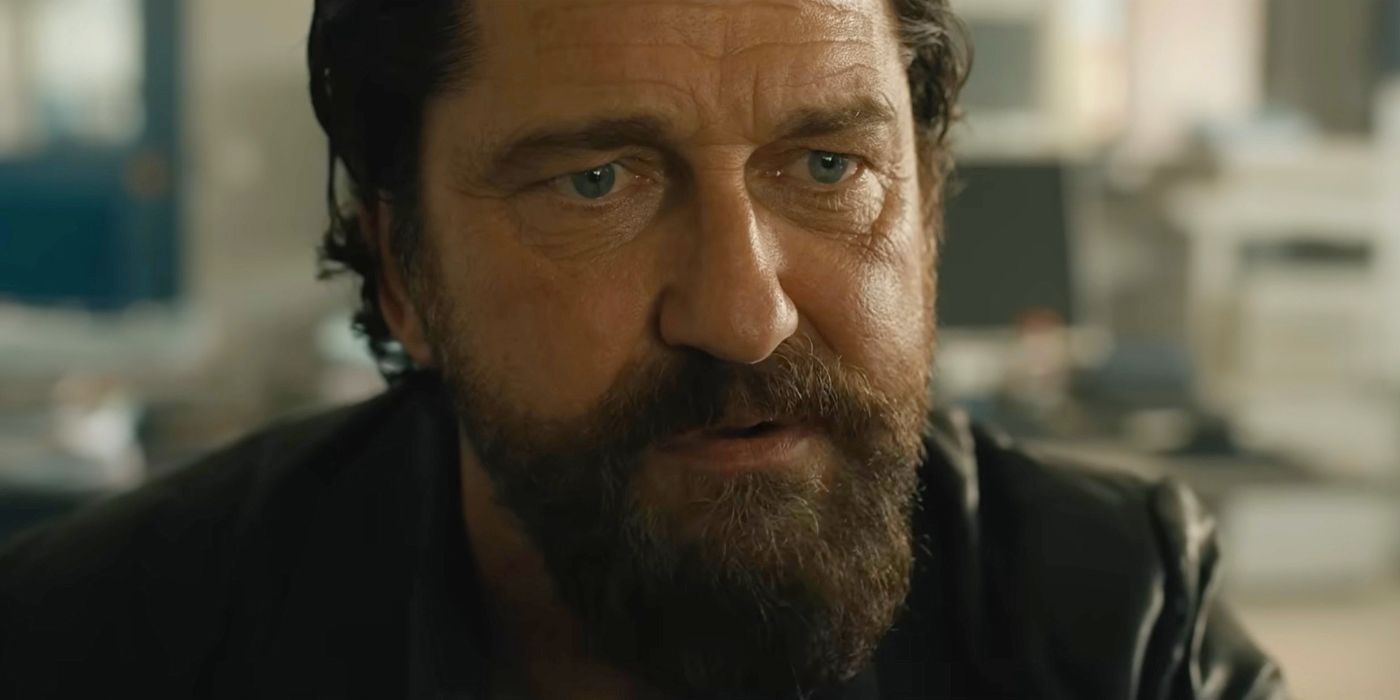
Gerard Butler’s Brutal $80M Action Thriller Finds a New Streaming Home
The "cops and robbers" premise has endured as one of cinema’s most reliable formulas because it taps into a primal tension: order versus chaos, law versus lawlessness, moral certainty against shifting loyalties. Few films have leaned into the grimier, more visceral side of that dynamic with as much unapologetic force as the 2018 release starring Gerard Butler and directed by Christian Gudegast. The movie arrived at a time when audiences were increasingly drawn to antiheroes, sprawling heist sequences, and stories that refused to sanitize the consequences of crime. Its recent move to a new streaming home has reignited interest, inviting both longtime action fans and new viewers to discover why this particular blend of muscle and pulpy storytelling continues to resonate.
The Cops-and-Robbers Genre: From Classics to Contemporary Grit
The genre’s roots stretch back to the early days of cinema, where moral lines were sharply drawn and the climax almost always delivered justice served. Early examples leaned into noir aesthetics, using shadowy cinematography to underscore the blurred boundaries between protagonists and antagonists. Over decades, the formula evolved: the 1970s brought more psychological complexity, the 1990s introduced self-aware irony, and the 2000s ushered in a wave of high-octane, effects-driven spectacles. Each era reinterprets the central conflict, but the engine remains the same—a chase, literally or figuratively, between those sworn to protect and those bent on breaking the rules.
In the modern wave, filmmakers have leaned into realism, using detailed world-building and character-driven motives to make the stakes feel immediate. The success of shows and films that explore corrupt precincts, morally compromised officers, and heists executed with military precision has proven that there is an appetite for stories that aren’t afraid to get their hands dirty. This shift has paved the way for movies like the 2018 thriller to carve out a niche that feels both nostalgic in its premise and fresh in its execution.
Den of Thieves and the Modern Reinvention
When a film pairs a charismatic lead with a director known for sharp, dialogue-heavy crime narratives, the result often becomes a touchstone for the subgenre. The 2018 collaboration paired Butler’s screen presence with Gudegast’s writing instincts, producing a story that doesn’t just coast on action set pieces but builds its tension from the textures of its underworld. The film’s premise—a meticulously planned heist of the Federal Reserve paired with a dogged police investigation—allows it to explore not only the mechanics of the crime but the personal codes that drive both the perpetrators and the pursuers.
What sets this entry apart is its commitment to length and detail. Clocking in at well over two hours, the film gives itself room to develop secondary characters, linger on the rhythms of police work, and showcase set pieces that feel grounded rather than purely decorative. The budget, reported in industry circles as a substantial figure, translates to practical effects, authentic locations, and a scope that refuses to feel constrained by its own ambitions.
Christian Gudegast’s Vision: Writing Action with Consequence
Christian Gudegast entered the director’s chair with a background steeped in screenwriting for the crime genre. His approach to this film emphasized that every action sequence should emerge organically from character decisions. Rather than staging set pieces for their own sake, Gudegast ensures that each chase, confrontation, or explosion is a direct outgrowth of the characters’ motivations and constraints. This philosophy results in a movie that feels plotted and earned, even as it delivers the kind of visceral thrills audiences expect from a major-star vehicle.
The screenplay’s dialogue crackles with the kind of terse, sometimes confrontational exchange that defines great crime dramas. Gudegast’s characters don’t merely speak to advance plot; they reveal attitude, hierarchy, and personal history through their words. This attention to linguistic detail elevates the material beyond a standard shoot-'em-up, giving viewers reasons to invest in outcomes beyond the next explosion.
Direction Choices That Prioritize Weight Over Speed
Gudegast’s direction favors deliberate pacing. By allowing scenes to breathe, he creates a sense of dread and anticipation that makes the rarer moments of high velocity hit harder. The film’s extended runtime becomes an asset rather than a liability because the audience is given time to understand the stakes, the alliances, and the personal code each faction operates by. This approach also permits a deeper exploration of the film’s central tension: the thin line between those who enforce the law and those who test its limits.
Gerard Butler’s Evolution into the Role
Gerard Butler has, over the past decade, become synonymous with a particular breed of action protagonist—one who possesses physical presence but also an underlying volatility. His career trajectory from historical epics to modern thrillers has been marked by a willingness to embrace roles that require both ruggedness and emotional range. In this 2018 outing, he steps into a character who is both a protector and a participant in the very world he’s tasked with policing.
Butler’s performance balances the swagger of a seasoned tough guy with moments of genuine frustration and weariness. This duality makes the character relatable on a human level, even as he navigates situations that are anything but ordinary. The actor’s physical commitment—performing many of his own stunts, undergoing rigorous training to convincingly portray a character entrenched in armed confrontations—adds a layer of authenticity that stands out in an era where many leading men rely heavily on doubles.
A Moral Compass in a World of Gray
One of the film’s most compelling aspects is how it positions its lead not as an infallible hero but as a man operating within a personal ethics system that sometimes clashes with the official mandate he represents. This internal conflict creates tension whenever Butler’s character must decide whether to follow protocol or follow instinct. The script uses these moments to question what "doing the right thing" looks like when the system itself is shown to be flawed or compromised.
Production Scale, Budget, and the Mechanics of a Big-Budget Thriller
Funding a film of this magnitude involves more than securing a high-profile cast; it requires coordination between production design, visual effects, location shooting, and a crew capable of delivering on ambitious practical goals. The film’s budget allowed for an unprecedented level of realism in its heist sequences. From the initial surveillance planning to the climactic vault breach, the movie opts for practical set pieces where possible, relying on real locations and tangible effects to ground the spectacle.
- Authentic Heist Planning: The screenplay incorporates genuine aspects of case planning, from surveillance sweeps to entry strategies, giving the criminal sequences a pedagogical feel without sacrificing drama.
- Practical Effects Over CGI: Key action moments—vehicle pursuits, structural breaches, hand-to-hand combat—were designed with practical rigs and coordinated stunt teams, resulting in visceral impact that CGI-heavy alternatives often struggle to match.
- Location Work: Shooting on location in Los Angeles and surrounding areas provided a lived-in backdrop that reinforces the film’s grounding in recognizable urban geography.
These choices contribute to a final product that feels expansive without losing its intimate character moments. The balance between large-scale set pieces and personal stakes is a delicate one, but the production’s commitment to both ensures that the audience never feels lost in the scope at the expense of the story.
Reception, Legacy, and the Shift to Streaming
Upon its initial theatrical run, the film divided critics. Some praised its ambition, performances, and unflinching tone, while others felt its runtime was indulgent and its narrative threads occasionally overstuffed. Audience reactions were more uniformly positive, with viewers drawn to the cat-and-mouse dynamics, the gritty aesthetic, and the satisfaction of watching a high-stakes game play out with few easy outs. Over time, the film developed a cult following, particularly among fans of the genre who appreciated its refusal to neatly tie up every loose end.
The recent move to a streaming platform has introduced the movie to a new demographic. In an era where home viewing habits have shifted decisively toward on-demand access, films that might have been overlooked in a crowded theatrical window find renewed life when they become available to browse, re-watch, and discover at the viewer’s convenience. Streaming also allows for the kind of serendipitous discovery that keeps older titles relevant—someone scrolling through a catalog may stumble upon this title, appreciate its craftsmanship, and add it to their watchlist.
The Economics of Mid-Budget Action in the Streaming Era
Streaming platforms have restructured how success is measured for action-driven fare. Previously, a film’s performance was measured primarily by opening weekend box office and subsequent home media sales. Today, a title’s value is gauged by completion rates, repeat views, and its ability to draw subscribers to a service. For a film of this profile, the streaming transition means that its hallmark action sequences and character moments can find an audience without the pressure of a simultaneous wide release. It also opens the door for the movie to be grouped with similar titles, creating discovery pathways that a fragmented theatrical schedule might have obscured.
Moreover, the tactile, rugged quality of the film’s action translates surprisingly well to smaller screens. The close-quarters combat, the lighting design of heist interiors, and the film’s color palette—muted tones punctuated by the occasional flash of muzzle flash or flashing city lights—all retain their impact when viewed on a variety of devices. This adaptability is a key factor in why certain theatrical releases find their second—and even third—lives in streaming environments.
Comparative Perspective: How It Fits Among Peers
The landscape of modern action thrillers is crowded, with franchises and standalone entries vying for attention. What distinguishes this 2018 release is its commitment to a nearly-two-hour runtime that prioritizes character and situation over nonstop kinetic energy. Many contemporary entries in the genre lean into shorter, faster pacing, aiming for a compact 90-minute experience. This film’s willingness to linger on its setup, to let scenes breathe, and to develop its ensemble cast sets it apart as a deliberate counterpoint to the sprint-like pacing that dominates much of the market.
When stacked against other Gerard Butler action vehicles, this title holds its ground through its crime-centric narrative. While Butler has led movies centered on survival, rescue missions, and supernatural threats, this particular effort roots itself in the heist-policing axis, a subgenre that demands as much brainpower as brawn. The film’s script, co-written by Gudegast, places equal weight on the planning stages of a crime and the subsequent investigation, a structure that respects the audience’s intelligence and rewards attentive viewing.
In a wider comparison to international entries—such as European productions that often blend noir sensibilities with modern thrash, or Asian films that fuse crime procedural elements with stylized action—this Hollywood-produced feature holds its own by embracing a rawer, less stylized aesthetic. Its commitment to practical realism, combined with the star power and marketability of its lead, creates a hybrid that appeals to both niche genre fans and broader action movie audiences.
Why the Film’s Themes Still Resonate
Beyond the immediate thrills of chase scenes and explosive set pieces, the film taps into broader societal conversations about authority, accountability, and the lengths to which individuals will go to secure their own version of justice. The cat-and-mouse dynamic between the protagonists and antagonists serves as a mirror to real-world debates about policing, corruption, and the moral complexities that arise when the lines between “good” and “bad” become indistinct. These themes are not new to cinema, but the film’s specific execution—grounded in a particular cityscape, with specific character backgrounds—lends them a contemporary urgency.
The heist at the film’s core is not portrayed as a victimless crime or a glamorous caper; its consequences are shown to ripple through multiple lives, affecting innocent bystanders, law enforcement families, and the perpetrators themselves. This refusal to glorify the criminal enterprise, combined with an equally unromantic portrayal of police work, creates a balanced tension that keeps the audience questioning outcomes long after the credits roll.
In addition, the film’s exploration of personal codes—unwritten rules that govern both the criminal underworld and the police precinct—speaks to a universal human experience: the need for a personal moral framework when the external systems meant to provide structure feel inadequate or compromised. This theme resonates across demographics, which may explain, in part, why the film continues to find new viewers through streaming channels.
Gerard Butler’s Brutal $80M Action Thriller Finds a New Streaming Home
The "cops and robbers" premise has endured as one of cinema’s most reliable formulas because it taps into a primal tension: order versus chaos, law versus lawlessness, moral certainty against shifting loyalties. Few films have leaned into the grimier, more visceral side of that dynamic with as much unapologetic force as the 2018 release starring Gerard Butler and directed by Christian Gudegast. The movie arrived at a time when audiences were increasingly drawn to antiheroes, sprawling heist sequences, and stories that refused to sanitize the consequences of crime. Its recent move to a new streaming home has reignited interest, inviting both longtime action fans and new viewers to discover why this particular blend of muscle and pulpy storytelling continues to resonate.
The "cops and robbers" premise has endured as one of cinema’s most reliable formulas because it taps into a primal tension: order versus chaos, law versus lawlessness, moral certainty against shifting loyalties. Few films have leaned into the grimier, more visceral side of that dynamic with as much unapologetic force as the 2018 release starring Gerard Butler and directed by Christian Gudegast. The movie arrived at a time when audiences were increasingly drawn to antiheroes, sprawling heist sequences, and stories that refused to sanitize the consequences of crime. Its recent move to a new streaming home has reignited interest, inviting both longtime action fans and new viewers to discover why this particular blend of muscle and pulpy storytelling continues to resonate.
The genre’s roots stretch back to the early days of cinema, where moral lines were sharply drawn and the climax almost always delivered justice served. Early examples leaned into noir aesthetics, using shadowy cinematography to underscore the blurred boundaries between protagonists and antagonists. Over decades, the formula evolved: the 1970s brought more psychological complexity, the 1990s introduced self-aware irony, and the 2000s ushered in a wave of high-octane, effects-driven spectacles. Each era reinterprets the central conflict, but the engine remains the same—a chase, literally or figuratively, between those sworn to protect and those bent on breaking the rules.
In the modern wave, filmmakers have leaned into realism, using detailed world-building and character-driven motives to make the stakes feel immediate. The success of shows and films that explore corrupt precincts, morally compromised officers, and heists executed with military precision has proven that there is an appetite for stories that aren’t afraid to get their hands dirty. This shift has paved the way for movies like the 2018 thriller to carve out a niche that feels both nostalgic in its premise and fresh in its execution.
Den of Thieves and the Modern Reinvention
When a film pairs a charismatic lead with a director known for sharp, dialogue-heavy crime narratives, the result often becomes a touchstone for the subgenre. The 2018 collaboration paired Butler’s screen presence with Gudegast’s writing instincts, producing a story that doesn’t just coast on action set pieces but builds its tension from the textures of its underworld. The film’s premise—a meticulously planned heist of the Federal Reserve paired with a dogged police investigation—allows it to explore not only the mechanics of the crime but the personal codes that drive both the perpetrators and the pursuers.
What sets this entry apart is its commitment to length and detail. Clocking in at well over two hours, the film gives itself room to develop secondary characters, linger on the rhythms of police work, and showcase set pieces that feel grounded rather than purely decorative. The budget, reported in industry circles as a substantial figure, translates to practical effects, authentic locations, and a scope that refuses to feel constrained by its own ambitions.
Christian Gudegast’s Vision: Writing Action with Consequence
Christian Gudegast entered the director’s chair with a background steeped in screenwriting for the crime genre. His approach to this film emphasized that every action sequence should emerge organically from character decisions. Rather than staging set pieces for their own sake, Gudegast ensures that each chase, confrontation, or explosion is a direct outgrowth of the characters’ motivations and constraints. This philosophy results in a movie that feels plotted and earned, even as it delivers the kind of visceral thrills audiences expect from a major-star vehicle.
The screenplay’s dialogue crackles with the kind of terse, sometimes confrontational exchange that defines great crime dramas. Gudegast’s characters don’t merely speak to advance plot; they reveal attitude, hierarchy, and personal history through their words. This attention to linguistic detail elevates the material beyond a standard shoot-'em-up, giving viewers reasons to invest in outcomes beyond the next explosion.
Direction Choices That Prioritize Weight Over Speed
Gudegast’s direction favors deliberate pacing. By allowing scenes to breathe, he creates a sense of dread and anticipation that makes the rarer moments of high velocity hit harder. The film’s extended runtime becomes an asset rather than a liability because the audience is given time to understand the stakes, the alliances, and the personal code each faction operates by. This approach also permits a deeper exploration of the film’s central tension: the thin line between those who enforce the law and those who test its limits.
Gerard Butler’s Evolution into the Role
Gerard Butler has, over the past decade, become synonymous with a particular breed of action protagonist—one who possesses physical presence but also an underlying volatility. His career trajectory from historical epics to modern thrillers has been marked by a willingness to embrace roles that require both ruggedness and emotional range. In this 2018 outing, he steps into a character who is both a protector and a participant in the very world he’s tasked with policing.
Butler’s performance balances the swagger of a seasoned tough guy with moments of genuine frustration and weariness. This duality makes the character relatable on a human level, even as he navigates situations that are anything but ordinary. The actor’s physical commitment—performing many of his own stunts, undergoing rigorous training to convincingly portray a character entrenched in armed confrontations—adds a layer of authenticity that stands out in an era where many leading men rely heavily on doubles.
A Moral Compass in a World of Gray
One of the film’s most compelling aspects is how it positions its lead not as an infallible hero but as a man operating within a personal ethics system that sometimes clashes with the official mandate he represents. This internal conflict creates tension whenever Butler’s character must decide whether to follow protocol or follow instinct. The script uses these moments to question what "doing the right thing" looks like when the system itself is shown to be flawed or compromised.
Production Scale, Budget, and the Mechanics of a Big-Budget Thriller
Funding a film of this magnitude involves more than securing a high-profile cast; it requires coordination between production design, visual effects, location shooting, and a crew capable of delivering on ambitious practical goals. The film’s budget allowed for an unprecedented level of realism in its heist sequences. From the initial surveillance planning to the climactic vault breach, the movie opts for practical set pieces where possible, relying on real locations and tangible effects to ground the spectacle.
- Authentic Heist Planning: The screenplay incorporates genuine aspects of case planning, from surveillance sweeps to entry strategies, giving the criminal sequences a pedagogical feel without sacrificing drama.
- Practical Effects Over CGI: Key action moments—vehicle pursuits, structural breaches, hand-to-hand combat—were designed with practical rigs and coordinated stunt teams, resulting in visceral impact that CGI-heavy alternatives often struggle to match.
- Location Work: Shooting on location in Los Angeles and surrounding areas provided a lived-in backdrop that reinforces the film’s grounding in recognizable urban geography.
These choices contribute to a final product that feels expansive without losing its intimate character moments. The balance between large-scale set pieces and personal stakes is a delicate one, but the production’s commitment to both ensures that the audience never feels lost in the scope at the expense of the story.
Reception, Legacy, and the Shift to Streaming
Upon its initial theatrical run, the film divided critics. Some praised its ambition, performances, and unflinching tone, while others felt its runtime was indulgent and its narrative threads occasionally overstuffed. Audience reactions were more uniformly positive, with viewers drawn to the cat-and-mouse dynamics, the gritty aesthetic, and the satisfaction of watching a high-stakes game play out with few easy outs. Over time, the film developed a cult following, particularly among fans of the genre who appreciated its refusal to neatly tie up every loose end.
The recent move to a streaming platform has introduced the movie to a new demographic. In an era where home viewing habits have shifted decisively toward on-demand access, films that might have been overlooked in a crowded theatrical window find renewed life when they become available to browse, re-watch, and discover at the viewer’s convenience. Streaming also allows for the kind of serendipitous discovery that keeps older titles relevant—someone scrolling through a catalog may stumble upon this title, appreciate its craftsmanship, and add it to their watchlist.
The Economics of Mid-Budget Action in the Streaming Era
Streaming platforms have restructured how success is measured for action-driven fare. Previously, a film’s performance was measured primarily by opening weekend box office and subsequent home media sales. Today, a title’s value is gauged by completion rates, repeat views, and its ability to draw subscribers to a service. For a film of this profile, the streaming transition means that its hallmark action sequences and character moments can find an audience without the pressure of a simultaneous wide release. It also opens the door for the movie to be grouped with similar titles, creating discovery pathways that a fragmented theatrical schedule might have obscured.
Moreover, the tactile, rugged quality of the film’s action translates surprisingly well to smaller screens. The close-quarters combat, the lighting design of heist interiors, and the film’s color palette—muted tones punctuated by the occasional flash of muzzle flash or flashing city lights—all retain their impact when viewed on a variety of devices. This adaptability is a key factor in why certain theatrical releases find their second—and even third—lives in streaming environments.
Comparative Perspective: How It Fits Among Peers
The landscape of modern action thrillers is crowded, with franchises and standalone entries vying for attention. What distinguishes this 2018 release is its commitment to a nearly-two-hour runtime that prioritizes character and situation over nonstop kinetic energy. Many contemporary entries in the genre lean into shorter, faster pacing, aiming for a compact 90-minute experience. This film’s willingness to linger on its setup, to let scenes breathe, and to develop its ensemble cast sets it apart as a deliberate counterpoint to the sprint-like pacing that dominates much of the market.
When stacked against other Gerard Butler action vehicles, this title holds its ground through its crime-centric narrative. While Butler has led movies centered on survival, rescue missions, and supernatural threats, this particular effort roots itself in the heist-policing axis, a subgenre that demands as much brainpower as brawn. The film’s script, co-written by Gudegast, places equal weight on the planning stages of a crime and the subsequent investigation, a structure that respects the audience’s intelligence and rewards attentive viewing.
In a wider comparison to international entries—such as European productions that often blend noir sensibilities with modern thrash, or Asian films that fuse crime procedural elements with stylized action—this Hollywood-produced feature holds its own by embracing a rawer, less stylized aesthetic. Its commitment to practical realism, combined with the star power and marketability of its lead, creates a hybrid that appeals to both niche genre fans and broader action movie audiences.
Why the Film’s Themes Still Resonate
Beyond the immediate thrills of chase scenes and explosive set pieces, the film taps into broader societal conversations about authority, accountability, and the lengths to which individuals will go to secure their own version of justice. The cat-and-mouse dynamic between the protagonists and antagonists serves as a mirror to real-world debates about policing, corruption, and the moral complexities that arise when the lines between “good” and “bad” become indistinct. These themes are not new to cinema, but the film’s specific execution—grounded in a particular cityscape, with specific character backgrounds—lends them a contemporary urgency.
The heist at the film’s core is not portrayed as a victimless crime or a glamorous caper; its consequences are shown to ripple through multiple lives, affecting innocent bystanders, law enforcement families, and the perpetrators themselves. This refusal to glorify the criminal enterprise, combined with an equally unromantic portrayal of police work, creates a balanced tension that keeps the audience questioning outcomes long after the credits roll.
In addition, the film’s exploration of personal codes—unwritten rules that govern both the criminal underworld and the police precinct—speaks to a universal human experience: the need for a personal moral framework when the external systems meant to provide structure feel inadequate or compromised. This theme resonates across demographics, which may explain, in part, why the film continues to find new viewers through streaming channels.


Comments
Post a Comment