Stephen King 'Long Walk' Streaming: Hunger Games Replacement
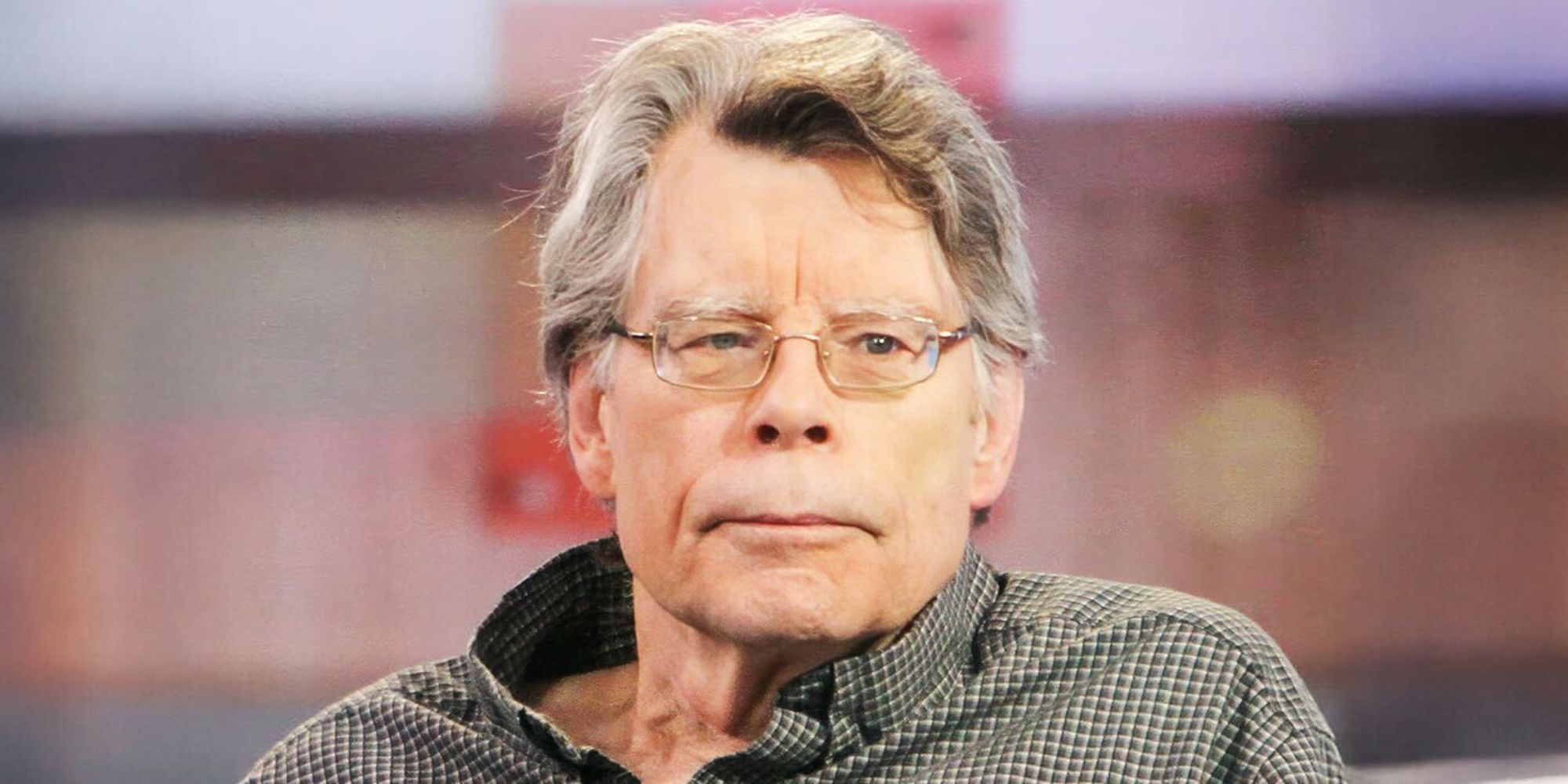
Stephen King’s “The Long Walk” Lands on Streaming – A Grim, Uncompromising Dystopia Replaces the ‘Hunger Games’ Formula
We're so used to dystopia these days having some kind of competitive edge to them, in the form of a game, or a competition, or a huge pot of gold at the end of the rainbow. Survival itself is the entertainment, but this time there's no arena or flashy costumes, no revolution waiting to catch fire and it's not even televised for our enjoyment. It is grim, simple, and honestly one of Stephen King’s nastiest premises ever conceived.
The arrival of The Long Walk on streaming platforms marks a significant pivot in how contemporary audiences consume King’s most abrasive, reality-altering fiction. Where most modern dystopias lean into spectacle—gladiatorial arenas, celebrity tributes, viral broadcasts—this adaptation strips the concept down to its bleakest essentials. It is a R-rated, unflinching walkthrough of human endurance under impossible pressure, and its streaming debut has reignited conversations about King’s lesser-explored screen adaptations and what they say about our collective fascination with survival games.
The Premise That Defies Modern Dystopian Tropes
In the current landscape of young-adult adaptations and streaming-scale sci-fi, the template established by The Hunger Games has become nearly ubiquitous: a society divided into districts, a televised death match, colorful costumes, and a revolution simmering in the background. The Long Walk refuses every single one of those conventions. The rules are deceptively simple: a group of teenage boys must walk. Continuously. Without stopping. The last one standing wins—literally anything the organizers promise, though the prize is less important than the sheer act of outlasting everyone else.
What makes the premise truly unsettling is the absence of arena infrastructure. There are no scaffolding structures, no holographic scoreboards, no audience cheering from stands. The walk happens on ordinary roads, in ordinary towns, under ordinary weather conditions. The competition is not engineered for entertainment; it is engineered for attrition. Every hour, the pace quickens. Every mile, the margin for error shrinks. Those who fall behind receive warnings. After three warnings, they are shot dead on the spot by roaming executioners known as "the Graders."
This design choice—removing the spectacle—shifts the entire psychological weight of the story. The participants are not performing for an audience; they are dying for a vague, almost absurd reward. The tension does not come from "will they be saved?" but from "how much longer can they keep putting one foot in front of the other?" It is a story about the human body pushed to its absolute limit, about pride, exhaustion, and the moral compromises people make when faced with certain death.
Stephen King’s Vision: Survival as Raw, Unfiltered Grime
Stephen King has always been fascinated by the spaces between ordinary life and extraordinary terror. In The Long Walk, originally published under his Richard Bachman pseudonym, that fascination turns inward. The novel was written in 1974, long before the dystopian YA boom, and its power lies in its refusal to romanticize the competition. King’s characters are not plucked from privileged backgrounds or trained from childhood for the event. They are regular kids, flawed, terrified, and driven by personal motivations that range from desperate hope to simple stubbornness.
The adaptation streaming now brings King’s stark prose to screen with an R rating that honors the source material’s darkness. Violence is not stylized; it is sudden, brutal, and often off-screen in the most unsettling way possible. The Graders, dressed in nondescript uniforms, represent an indifferent machine that does not hate the walkers but simply enforces the rules. There is no grand conspiracy revealed midway through, no secret rebellion forming in the first act. The story remains focused, claustrophobic, and unrelenting.
King’s exploration of toxicity in competitive frameworks is as relevant today as it was decades ago. The walkers are goaded by whispered encouragements from spectators living on the sidelines—people who treat the event as sport, as entertainment, as a way to pass the time. These bystanders are perhaps the most relatable characters in the entire narrative, holding up a mirror to any audience that has ever rooted for a bloodsport without examining why.
The Literary Roots of “The Long Walk”
King wrote The Long Walk during a period when he was experimenting with pseudonyms and pushing himself beyond the boundaries of his established horror reputation. The novella won a prestigious Fanfare competition and has since become a cult classic among King completists. Its influence can be seen in numerous later works, from the televised death matches of futuristic young adult franchises to more subtle examinations of competition and survival in King’s later novels. What sets it apart is its commitment to a single, unchanging premise without deviation. The walk is the entire story, and King mines every psychological inch of that confined scenario.
The prose style is lean and propulsive, mirroring the gait of the walkers themselves. Sentences are short. Descriptions are economical. There is no wasted space, just as there is no rest for the characters. This stylistic choice reinforces the central theme: survival is not about grandeur or heroism in the traditional sense. It is about endurance, about finding a reason to keep moving when every muscle aches and every breath is a battle.
Comparisons to “The Hunger Games” and the Evolution of Dystopian Storytelling
It is impossible to discuss The Long Walk without confronting the inevitable comparison to The Hunger Games. Both stories place young people in life-or-death situations where the audience watches. Both explore themes of class division, government control, and the human cost of entertainment. Yet the differences are fundamental and intentional.
The Hunger Games is a story about rebellion. From the first spark of the uprising in District 11 to the full-scale war in later installments, the narrative arc moves toward resistance and overthrow. The games themselves are a tool of the Capitol’s power, but they also become a catalyst for change. Katniss Everdeen’s journey is explicitly political, and the story leverages that politics to drive toward a conclusion of liberation.
The Long Walk, by contrast, is not about overthrowing a system. The system is never questioned, never sabotaged, never even fully explained. The walk exists as a fact of this world, like weather or gravity. The participants can attempt to strategize, can try to form temporary alliances, can encourage one another, but the underlying structure remains immutable. This absence of a revolutionary arc is precisely what makes the story so unsettling for modern audiences raised on hero’s journeys and narrative closure. It asks a uncomfortable question: what if there is no bigger meaning? What if the walk is simply an end in itself?
Game Mechanics vs. Human Endurance
Modern dystopian tales often lean heavily into the mechanics of the competition. Rules are explained. Scores are tracked. Arbiters outline scoring criteria, power-ups, or strategic advantages. The Long Walk strips these away. The only rule is keep walking. The pace increases. Warnings are issued. The simplicity forces the focus onto the characters’ internal states. Fatigue sets in. Hallucinations appear. Old memories surface, unbidden. The walk becomes a crucible for revealing who these people truly are when the safety net of society’s rules is stripped away.
This mechanic also inverts the typical audience-participant relationship. In a televised game, the audience is central. In The Long Walk, the audience is explicitly told they should not be watching. The bystanders who treat the walk as entertainment are portrayed as detached, almost grotesque in their casual cruelty. The story’s true horror emerges not from the walkers’ predicament alone, but from the realization that people will always find ways to turn suffering into spectacle, regardless of whether the participants consent or even understand the rules.
The Absence of Revolution and Spectacle
One of the most daring decisions in both the novel and its screen adaptation is the decision to never build toward a revolt. In most survival narratives, there is a tipping point—a moment when the oppressed rise up, when the odds shift, when the audience gets the catharsis of resistance. The Long Walk denies that satisfaction. The Graders continue their patrols. The rules remain unchanged. The walk continues until only one person remains.
For some readers and viewers, this lack of resolution is frustrating. For others, it is the point. King is examining the psychology of endurance without the promise of a hero’s exit. The walkers who survive do so not because they led an uprising, but because they outlasted everyone else. The ending is quiet, ambiguous, and deeply human. It acknowledges that not every story needs a revolution to have meaning. Sometimes, the only victory is simply finishing the walk.
The Streaming Adaptation: What Sets This Version Apart
The recent streaming release of The Long Walk brings King’s novella to a new medium with a fidelity that respects its tone and texture. The decision to rate the adaptation R was not arbitrary; it was necessary to capture the grit, the sudden violence, and the unvarnished language that King employed. The production design avoids the polished, futuristic aesthetic that has become default for dystopian media. Instead, the world feels lived-in, weathered, and immediate. The walkers wear ordinary clothes that become tattered and muddy over time. The landscape shifts from rural roads to desolate highways, emphasizing the isolation of the premise.
Performance-wise, the cast delivers portrayals that prioritize vulnerability over heroism. The walkers are not invincible protagonists; they are terrified young people pushed to breaking point. Their internal monologues, preserved through voiceover and subtle cinematography, convey the mental toll of endless movement. The Graders are portrayed not as mustache-twirling villains but as functionaries carrying out a grim duty, reinforcing the idea that the system persists regardless of individual malice.
The streaming format itself adds a layer of irony to the material. Viewers can pause, rewind, and binge the story in the comfort of their homes—a luxury the walkers never experience. Yet the content’s relentless pace and oppressive atmosphere create a viewing experience that feels confrontational rather than comforting. The series does not allow the audience to settle into comfort; it demands attention to the physical and emotional cost of the walk.
Why This Matters for King Fans and Dystopia Enthusiasts
For longtime Stephen King readers, The Long Walk offers a rare glimpse into a side of his oeuvre that does not rely on the supernatural or the explicitly horrific. It is a character study wrapped in a high-concept premise, a testament to King’s range and his willingness to experiment with form and genre. The Bachman pseudonym era of his career produced several such works—Rage, Roadwork, The Running Man—each exploring different facets of human behavior under pressure. The Long Walk stands as the most sustained examination of those themes, a single-note sustained over hundreds of pages and now, hours of screen time.
For fans of the dystopian genre, the adaptation provides a refreshing counterpoint to the saturation of game-based survival stories. It challenges the assumption that every competition needs an audience, a revolution, or a prize pool. It reminds us that the most powerful stories can emerge from the simplest constraints, and that the true horror of any system often lies not in its grandeur but in its persistence.
The conversation sparked by the streaming debut also reflects a broader cultural moment. We are living through an era where survival content—whether in gaming, reality television, or fictional drama—is consumed at unprecedented rates. The Long Walk holds up a mirror to that consumption, asking viewers to interrogate their own relationship with distress as entertainment. Why do we watch? What does it say about us that we seek out stories of prolonged suffering? And perhaps most importantly, what are we willing to accept as “just a story” versus something that demands a moral reckoning?
In the end, The Long Walk arriving on streaming is more than just another adaptation added to a crowded slate. It is a deliberate, uncompromising work that refuses to pander to audience expectations of spectacle, revolution, or tidy resolution. It is grim, it is simple, and it is exactly the kind of challenging content that keeps Stephen King’s legacy vital and vitalizing, decades after the novella first saw print.
As viewers settle in to watch the walk unfold on their screens, they are invited to consider a different kind of dystopia—one without arenas, without anthems, without the promise of a better world on the horizon. Only a road, a group of walkers, and the relentless, unyielding miles ahead. It is a premise that stays with you long after the final credits roll, a testament to King’s enduring ability to find the extraordinary terror hidden in the most ordinary of circumstances.


Comments
Post a Comment